
Planning a trip today isn’t as straightforward as it was a few years ago. Flight prices change constantly, airline policies vary widely, and travel disruptions can happen without warning.
One of the biggest decisions travelers face while booking flights is whether to choose a Pre-Purchase Ticket or pay extra for a Flexible Ticket.
At first glance, the cheaper option often looks attractive. After all, who doesn’t want to save money on airfare? But what happens if your plans suddenly change?
This guide breaks down the differences, benefits, drawbacks, and real-world scenarios to help you determine which ticket type makes the most sense for your travel needs in 2026.
Table of Contents
Understanding Pre-Purchase Tickets
A Pre-Purchase Ticket is a discounted airfare that requires travelers to book a certain number of days before departure.
Airlines offer these fares because they want to secure bookings early.
Common Characteristics
- Lower ticket prices
- Limited seat availability
- Strict cancellation policies
- High change fees
- Often non-refundable
- Advance booking required
Why Airlines Offer Them
Airlines use pre-purchase fares to predict demand and guarantee revenue before departure.
In return, travelers receive significant discounts compared to last-minute fares.
Understanding Flexible Tickets
Flexible tickets allow travelers to change travel dates, times, and sometimes destinations with little or no penalty.
These tickets are designed for travelers who need maximum freedom.
Common Characteristics
- Date changes allowed
- Reduced or zero change fees
- Better cancellation policies
- Partial or full refunds
- Priority customer support in some cases
Why They Cost More
Airlines charge a premium because flexible tickets provide travelers with greater control and less financial risk.
Quick Comparison Table
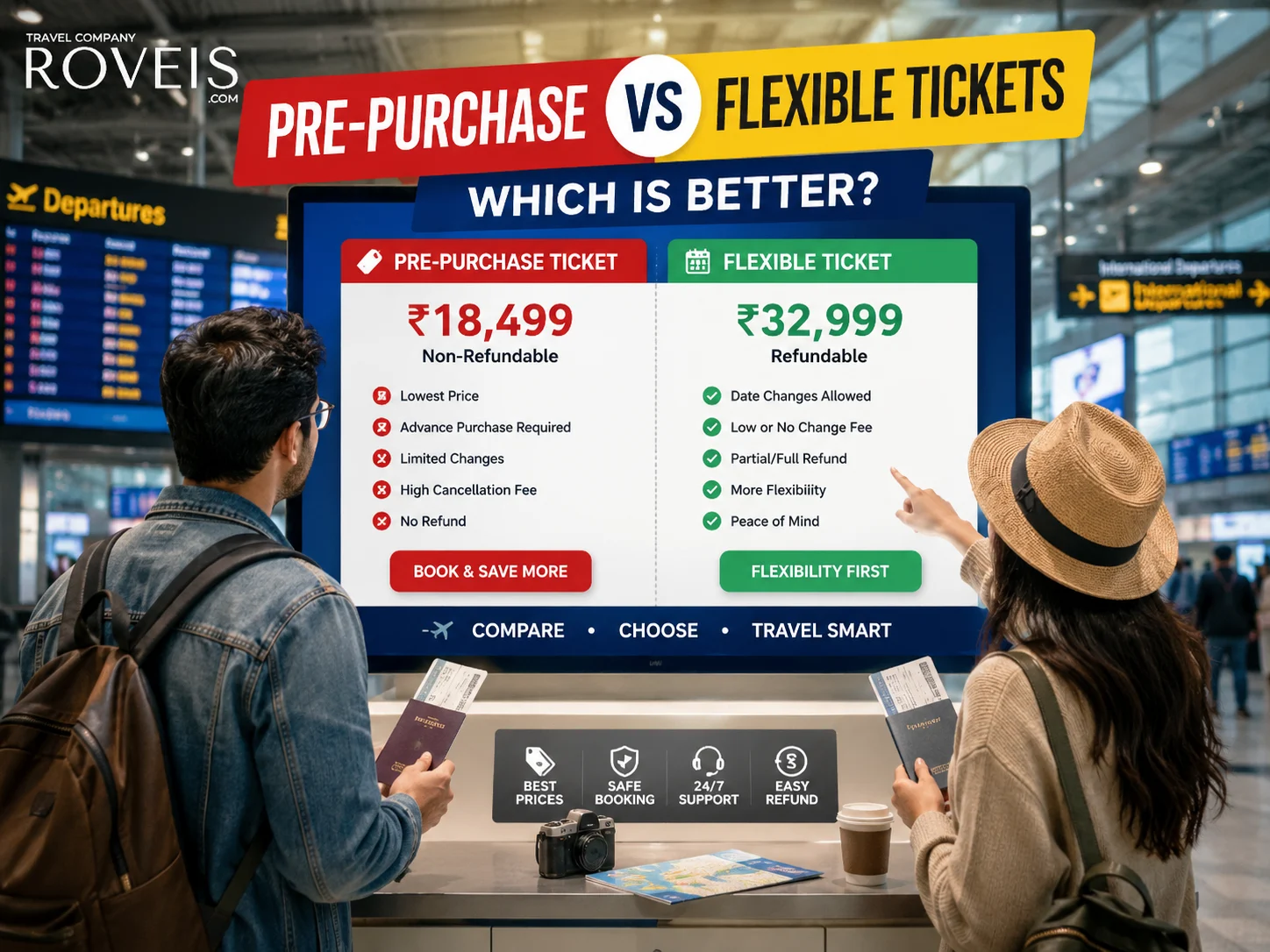
| Feature | Pre-Purchase Ticket | Flexible Ticket |
|---|---|---|
| Price | Lower | Higher |
| Changes Allowed | Limited | Yes |
| Refundability | Usually No | Often Yes |
| Best For | Fixed plans | Uncertain plans |
| Cancellation Fees | High | Low or None |
| Business Travelers | Not Ideal | Highly Recommended |
| Family Emergencies | Risky | Safer |
When Pre-Purchase Tickets Make Sense
Pre-purchase tickets are ideal when your travel plans are almost guaranteed not to change.
Best Situations
1. Family Vacations
If hotels, tours, and activities are already booked, cheaper airfare can significantly reduce overall trip costs.
2. Fixed Event Travel
Examples include:
- Weddings
- Conferences
- Religious pilgrimages
- Sports events
3. Budget-Conscious Travelers
Students and backpackers often prioritize savings over flexibility.
Example
A Delhi to Dubai round-trip ticket booked 90 days in advance may cost ₹18,000–₹24,000.
The same flexible fare could cost ₹35,000–₹50,000.
When Flexible Tickets Are Worth Paying For
Many travelers underestimate how valuable flexibility can be.
Best Situations
1. Business Travel
Meeting schedules often change.
A flexible ticket can save both time and money.
2. Visa-Dependent Travel
If your visa approval is pending, flexible tickets reduce risk.
Travelers applying through professional Visa Assistance services often choose flexible fares until approval is received.

Need Visa Assistance? Contact at
Need Visa Assistance? Contact at
Explore travel documentation support through:
3. Medical or Family Uncertainty
Unexpected events can force itinerary changes.
Flexible tickets provide peace of mind.
4. Multi-Country Trips
Complex itineraries often require adjustments.
Flexible fares help travelers adapt without losing the entire ticket value.
The Hidden Costs Travelers Often Ignore
Many travelers focus only on the ticket price.
This can be a costly mistake.
Common Hidden Expenses
- Change penalties
- Fare difference charges
- Cancellation fees
- Rebooking costs
- New visa appointment expenses
- Additional hotel charges
A cheap ticket may become more expensive than a flexible ticket if plans change.
Real Travel Scenario
Imagine you book a non-refundable flight to Europe six months in advance.
Everything seems perfect.
Then your visa interview gets delayed.
Now you must:
- Cancel the original flight
- Pay cancellation charges
- Purchase a new ticket
- Potentially lose hotel bookings
A flexible ticket could have avoided these losses entirely.
Travel Trends in 2026
Airlines are increasingly introducing hybrid fare structures.
These include:
- Basic Economy
- Standard Economy
- Semi-Flexible Fares
- Fully Flexible Fares
Many travelers now prefer semi-flexible options because they balance affordability and flexibility.
Common Mistakes Travelers Make
Booking the Cheapest Fare Without Reading Rules
Many travelers discover restrictions only after trying to make changes.
Ignoring Visa Timelines
International travelers frequently book flights before receiving visa approvals.
Not Considering Family Travel Risks
Children’s schedules, school changes, and health concerns can affect travel plans.
Assuming Travel Insurance Covers Everything
Insurance policies vary significantly and may not cover all fare losses.
Expert Travel Tips
Choose Pre-Purchase Tickets If
✓ Your travel dates are fixed
✓ Visa is already approved
✓ Hotel bookings are confirmed
✓ Budget is the primary concern
Choose Flexible Tickets If
✓ Travel dates may change
✓ Visa approval is pending
✓ Business travel is involved
✓ Multiple destinations are planned
MUST READ
Before booking international flights, many travelers also need:
Passport Services
Whether you need a new passport, renewal, Tatkal processing, lost passport assistance, or damage passport support, visit:

Need Passport Assistance? Contact at
Need Passport Assistance? Contact at
Flight Booking Assistance
Compare airfare options and find affordable international flights.
Smart Traveler Checklist
Before purchasing any flight ticket:
- Verify passport validity
- Check visa requirements
- Review airline change policies
- Read cancellation terms carefully
- Compare flexible and non-flexible fares
- Consider travel insurance
- Confirm hotel booking policies
Frequently Asked Questions
Are flexible tickets fully refundable?
Not always. Refund rules depend on airline fare conditions.
How much more expensive are flexible tickets?
Typically 20%–100% more expensive than standard pre-purchase fares.
Can I upgrade a pre-purchase ticket later?
Some airlines allow upgrades, but additional charges usually apply.
Are flexible tickets worth it for international travel?
Yes, especially when visas, business meetings, or family situations may affect travel dates.
Do travel insurance policies replace flexible tickets?
Not completely. Insurance and ticket flexibility serve different purposes.
Which option is best for visa applicants?
Flexible tickets are generally safer until visa approval is received.
Are flexible tickets available on all airlines?
Most major international airlines offer some form of flexible fare.
Conclusion
There is no universal winner in the Pre-Purchase Tickets vs Flexible Tickets debate.
The right choice depends on your travel certainty, budget, and risk tolerance.
If your plans are fixed and every rupee matters, pre-purchase tickets can deliver excellent savings.
However, if uncertainty exists—especially regarding visas, business commitments, or family situations—a flexible ticket can save significant money, stress, and inconvenience later.
The smartest travelers don’t simply choose the cheapest fare; they choose the fare that best matches their travel situation.
Affiliate Disclosure
This article may contain affiliate links. If you purchase products or services through these links, we may earn a small commission at no additional cost to you.
Disclaimer
Travel rules, airline policies, visa requirements, and ticket conditions may change without notice. Always verify information with official airline, airport, embassy, and government sources before making travel decisions. Pricing, availability, and cancellation policies may vary by season and provider.