
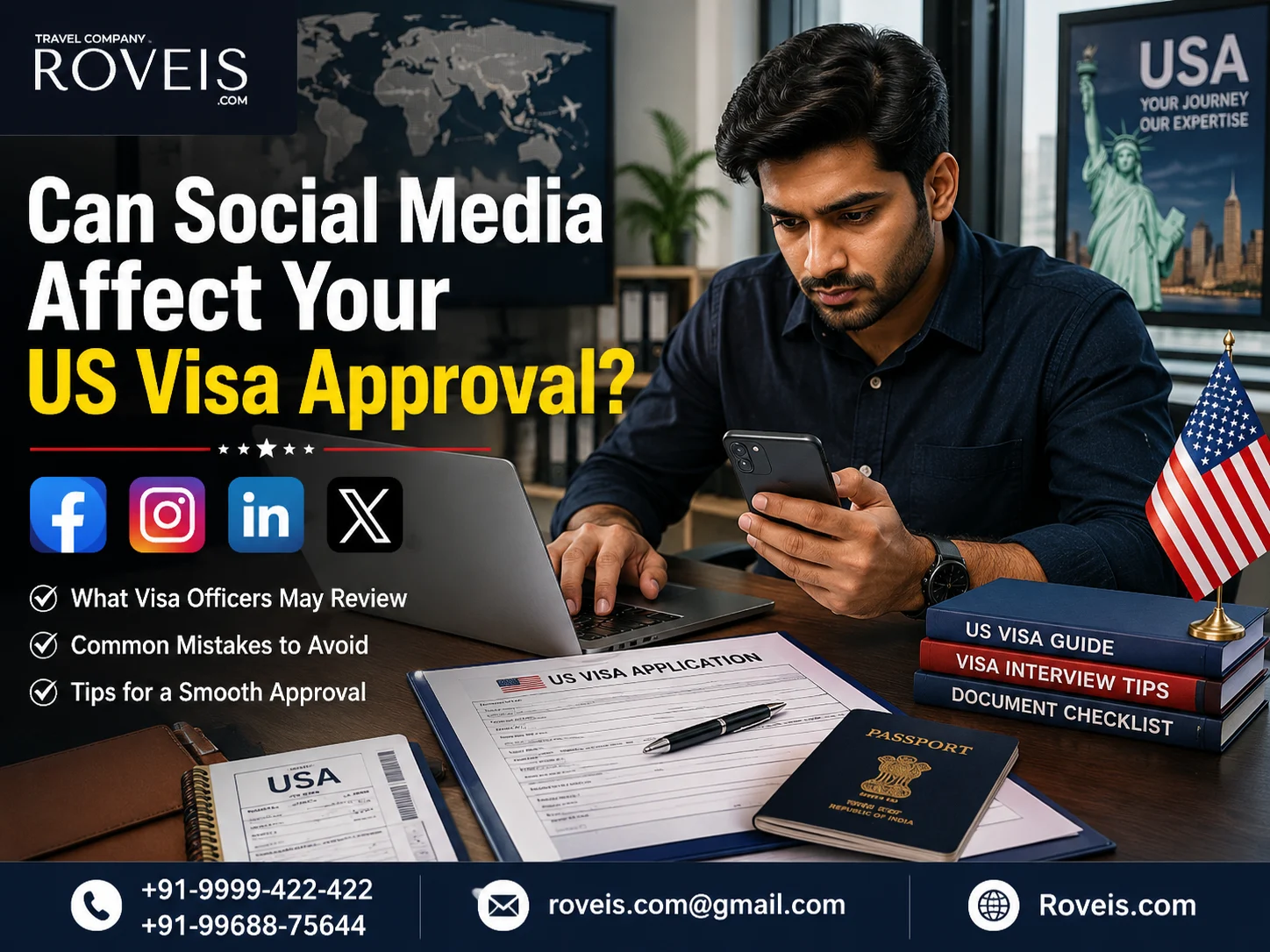
Imagine spending weeks gathering documents, paying visa fees, booking interview slots, and preparing for your dream trip to the United States—only to wonder whether a few old social media posts could affect your visa application.
Many travelers are surprised to learn that social media has become a significant component of modern immigration screening. In today’s digital world, what you share publicly online can sometimes provide immigration authorities with additional context about your travel intentions, employment claims, educational background, or identity.
For Indian travelers planning to visit the United States for tourism, studies, business, or work opportunities, understanding how social media may impact visa processing has become increasingly important.
If you’re planning your US trip, arranging Travel Visa Services, Passport Assistance, or searching for Affordable Air Tickets, being aware of social media screening practices can help you avoid unnecessary complications.
Table of Contents
Why Does the US Government Review Social Media?
Over the past several years, US immigration authorities have expanded background verification processes to strengthen national security and verify applicant information.
During visa applications, applicants are often asked to provide social media identifiers used during recent years. These may include:
The purpose is not necessarily to monitor every post but to help verify:
- Identity consistency
- Employment claims
- Educational background
- Travel history
- Potential security concerns
- Fraudulent information
Authorities may compare information provided in visa applications with publicly available online content.
Does Social Media Automatically Determine Visa Approval?
The short answer is no.
A visa decision is based on multiple factors, including:
| Factor | Importance |
|---|---|
| Passport validity | High |
| Purpose of travel | High |
| Financial capability | High |
| Travel history | High |
| Interview performance | High |
| Supporting documents | High |
| Social media review | Supporting factor |
Social media generally serves as an additional verification tool rather than the sole basis for approval or rejection.
However, inconsistencies discovered online can raise questions during application reviews.
What Kind of Social Media Content Can Raise Concerns?
1. Contradictory Employment Information
Suppose an applicant states they work for a particular company but publicly claims a completely different employment status online.
Such inconsistencies may trigger additional scrutiny.
2. Misrepresentation of Travel Intentions
If someone applies for a tourist visa but repeatedly posts about plans to work illegally in another country, authorities may question the stated purpose of travel.
3. Fraudulent Documentation Indicators
Immigration officers may review whether publicly available information conflicts with submitted documentation.
4. Security-Related Concerns
Content that appears threatening, promotes violence, or raises national security concerns may attract additional examination.
Common Social Media Mistakes Travelers Make
Many travelers unintentionally create issues by neglecting their online presence before applying for a visa.
Common mistakes include:
Sharing False Information
Exaggerated resumes, fake job titles, or misleading educational claims can create inconsistencies.
Posting Sensitive Travel Plans
Publicly discussing intentions that differ from visa categories may create questions.
Maintaining Abandoned Accounts
Old accounts with outdated information sometimes contradict current applications.
Public Arguments About Immigration Loopholes
Posts discussing visa misuse or unauthorized work abroad can be viewed negatively.
Can Private Accounts Be Reviewed?
This is one of the most frequently asked questions among visa applicants.
Generally, authorities review information that is legally accessible through the visa process and publicly available sources.
While privacy settings provide some control over visibility, applicants should understand that information voluntarily shared online may become part of broader verification efforts.
The safest approach is maintaining truthful and consistent information across all platforms.
How Indian Travelers Should Prepare Before Applying
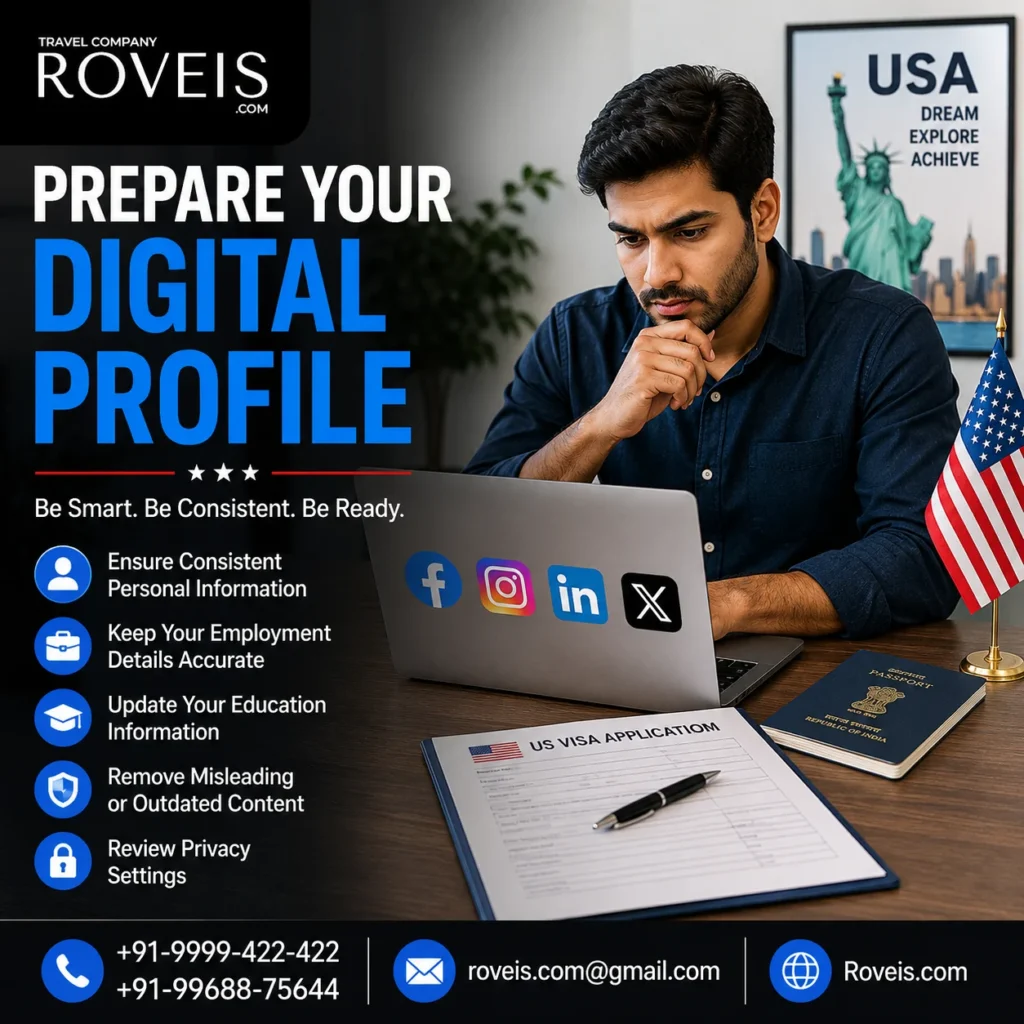
Before submitting a US visa application, consider conducting a digital profile review.
Check Profile Consistency
Verify:
- Name spelling
- Employment details
- Educational background
- Professional history
Remove Misleading Information
Delete outdated information that may create confusion.
Update LinkedIn Profiles
Professional platforms should accurately reflect your current status.
Review Public Posts
Look for content that could be misunderstood or contradict application information.
MUST READ: Important Travel Documents Before US Visa Application
Besides maintaining a clean digital presence, ensure your travel documents are accurate and updated.
Travelers often require:
- Passport Renewal Assistance
- Tatkal Passport Services
- Lost Passport Help
- Damage Passport Assistance
Explore Passport Services:

Need Passport Assistance? Contact at
Need Passport Assistance? Contact at
If you’re applying for a US visa or other international visas, professional Visa Assistance can help reduce documentation errors.
Explore Visa Services:

Need Visa Assistance? Contact at
Need Visa Assistance? Contact at
Examples
Consider two hypothetical travelers.
Applicant A
- Consistent LinkedIn profile
- Stable employment history
- Clear travel purpose
- Accurate documentation
Applicant B
- Tourist visa application
- Public posts suggesting work intentions
- Contradictory employment information
- Multiple inconsistent online profiles
While many factors affect outcomes, Applicant A is less likely to trigger additional questions during screening.
This demonstrates why consistency matters.
What Social Media Platforms Matter Most?
While no official ranking exists, commonly reviewed platforms may include:
| Platform | Potential Relevance |
|---|---|
| Employment verification | |
| Identity consistency | |
| Public travel content | |
| X/Twitter | Public opinions and statements |
| YouTube | Public videos and content |
| TikTok | Public profile activity |
Expert Tips for a Smooth US Visa Application
Be Honest Everywhere
Consistency is one of the strongest visa application strategies.
Avoid Last-Minute Profile Changes
Sudden changes across multiple platforms may appear unusual.
Maintain Professional Online Presence
Especially for students, business travelers, and work visa applicants.
Keep Travel Records Organized
Store:
- Passport copies
- Previous visas
- Travel itineraries
- Hotel bookings
- Flight reservations
Need assistance with International Flight Booking or Best Flight Deals?
Compare Flight Tickets with Simple Click!
Common Myths About Social Media and US Visas
Myth: Immigration Officers Read Every Message
Reality: Screening processes focus on relevant information and verification.
Myth: Private Accounts Guarantee No Review
Reality: Privacy settings help, but truthful information remains essential.
Myth: One Negative Post Causes Automatic Rejection
Reality: Visa decisions are based on multiple factors.
Myth: Deleting All Accounts Improves Approval Chances
Reality: Sudden account deletion may create additional questions rather than solve them.
Frequently Asked Questions
Can social media affect US visa approval?
Yes, social media may be used as part of broader verification and security screening processes.
Does the US visa application ask for social media accounts?
Many applicants may be asked to provide social media identifiers used in recent years.
Can old Facebook posts affect a visa application?
Potentially, if they contradict information provided during the application process.
Should I make my accounts private before applying?
Privacy settings are personal choices, but maintaining truthful and consistent information is more important.
Can LinkedIn help verify employment?
Yes. Professional profiles may support employment information presented during applications.
Does social media alone determine visa approval?
No. Visa decisions depend on multiple factors, including documentation, finances, interview performance, and eligibility.
Should students review social media before applying?
Yes. Students should ensure educational and personal information remains accurate and consistent.
Can visa consultants help with documentation?
Professional Visa Consultancy services can help applicants prepare accurate documentation and avoid common mistakes.
Conclusion
The digital footprint we leave behind is becoming increasingly relevant in international travel and immigration processes. While social media alone does not decide whether a US visa is approved or rejected, inconsistencies between online activity and official applications can create unnecessary complications.
For travelers planning a US visit in 2026, the best strategy is simple: be honest, maintain accurate information, and ensure your online presence aligns with the details provided in your visa application.
A little preparation today can help prevent avoidable delays tomorrow.
Affiliate Disclosure
This article may contain affiliate or referral links. If you choose to use certain services through these links, we may earn a commission at no additional cost to you.
Disclaimer
Visa regulations, immigration procedures, airline policies, and travel requirements may change without notice. Travelers should always verify information through official government and embassy sources before making travel decisions. Pricing, availability, and processing timelines may vary depending on the season and destination.