

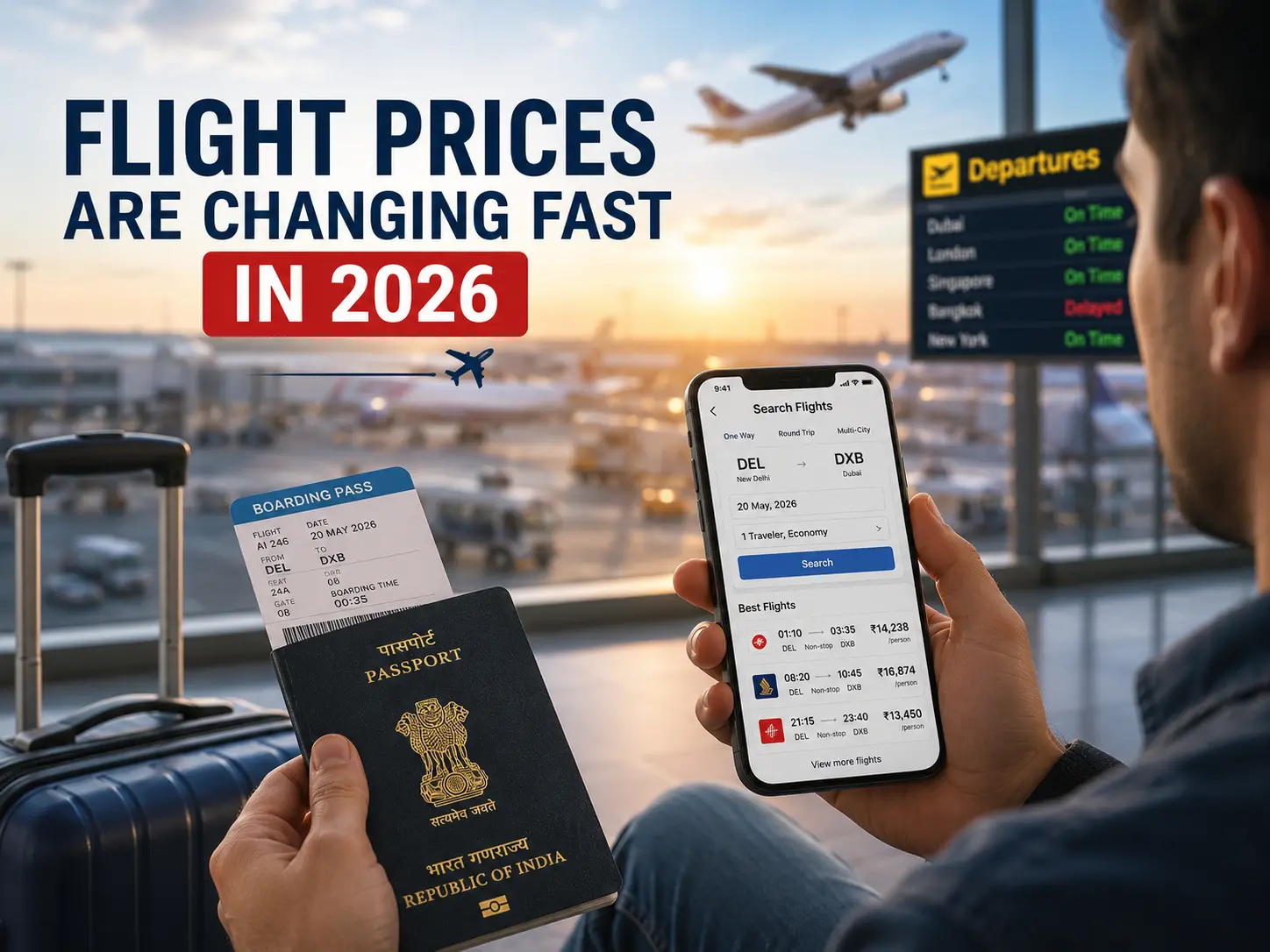
Many travelers searching for flight tickets in 2026 are noticing something frustrating — airfare prices can suddenly increase within hours, even for the same route and airline.
A flight that looked affordable in the morning may become significantly more expensive by evening. For families, honeymoon travelers, students, and business passengers, these unpredictable fare changes are creating confusion during travel planning.
As international tourism continues growing rapidly, airlines and booking systems are constantly adjusting prices based on:
- demand,
- destination popularity,
- travel season,
- booking behavior,
- and even browsing patterns.
Because of this, travelers are now becoming far more strategic about how and when they book flights.
Table of Contents
Why Flight Prices Change So Quickly
Many travelers assume airlines use fixed pricing systems. In reality, modern airfare pricing works dynamically.
Airlines constantly monitor:
- seat demand,
- route popularity,
- competitor pricing,
- fuel costs,
- holiday traffic,
- and booking speed.
This means ticket prices can fluctuate several times in a single day.
Popular destinations like:
- Dubai,
- Thailand,
- Bali,
- Europe,
- Singapore,
- and Maldives
often experience faster fare changes during peak travel periods.
A Situation Many Travelers Experience
A traveler from Mumbai recently searched for round-trip tickets to Dubai for a family vacation.
In the afternoon, the airfare appeared reasonably priced. After discussing travel dates with family members and waiting until night to confirm, the same flight had increased by nearly ₹9,000 for four passengers combined.
The traveler later realized the route was experiencing rising booking demand due to a long weekend rush.
Situations like this are becoming extremely common in 2026.
Compare Flight Tickets with Simple Click!
Why Waiting Too Long Can Become Expensive
Many travelers delay booking because they hope prices will drop further.
Sometimes this works.
But during:
- holiday seasons,
- school vacations,
- festival periods,
- long weekends,
- and international event seasons,
waiting too long can become risky.
Flights to tourist-heavy destinations often rise sharply as seat availability decreases.
This becomes even more noticeable for:
- evening departures,
- weekend travel,
- direct flights,
- and family-friendly timings.
Travelers Are Now Booking Trips Differently
Frequent travelers are becoming more flexible in order to save money.
Instead of focusing only on:
- exact dates,
- fixed airlines,
- or specific airports,
many travelers now compare:
- nearby airport options,
- mid-week departures,
- late-night flights,
- flexible return dates,
- connecting routes.
Even small adjustments can sometimes reduce airfare significantly.
The Biggest Mistakes Travelers Make While Booking Flights
Booking Too Late
Last-minute bookings are usually more expensive for international routes.
Especially during:
- summer vacations,
- Christmas & New Year,
- honeymoon season,
- student travel periods.
Ignoring Baggage Policies
Some low-cost tickets appear cheap initially but become expensive after:
- baggage charges,
- seat selection fees,
- meal add-ons,
- rescheduling costs.
Many travelers only discover these extra charges during final checkout.
Compare Flight Tickets with Simple Click!
Booking Without Checking Transit Rules
International travelers sometimes book cheaper connecting flights without understanding:
- visa requirements,
- airport transfer rules,
- self-transfer complications,
- overnight layover issues.
This can create unexpected travel stress later.
Panic Booking During Fare Increases
When travelers see prices rising quickly, many rush into booking without:
- checking alternate dates,
- comparing nearby airports,
- reviewing baggage policies,
- or comparing airlines.
This often leads to overpaying unnecessarily.
Why Mobile Flight Searches Are Increasing
Most travelers now search for airfare directly from:
- smartphones,
- travel apps,
- airline apps,
- or meta-search platforms.
This shift has changed booking behavior significantly.
Travelers increasingly:
- monitor fares daily,
- compare multiple websites,
- track routes,
- and wait for promotional periods.
Flight search platforms are also becoming smarter with:
- price alerts,
- flexible date suggestions,
- and fare trend predictions.
International Travel Demand Is Growing Rapidly
Travel experts believe global tourism demand from India will continue increasing strongly in 2026.
Major reasons include:
- affordable international tourism,
- remote work flexibility,
- rising middle-class travel,
- destination weddings,
- family tourism,
- visa-friendly destinations.
This is creating higher demand for:
- international flights,
- premium economy seats,
- family routes,
- and flexible tickets.
Smart Travelers Now Plan Flights Before Hotels
Experienced travelers increasingly prioritize:
- airfare monitoring,
- visa preparation,
- travel timing,
- and passport validity
before finalizing expensive hotel bookings.
This helps avoid:
- cancellation losses,
- visa-related uncertainty,
- expensive last-minute flights.
Why Red-Eye and Mid-Week Flights Are Becoming Popular
Travelers looking to reduce costs are increasingly choosing:
- Tuesday departures,
- Wednesday return flights,
- overnight journeys,
- early morning flights.
These timings may sometimes offer better pricing compared to peak-hour departures.
Budget-conscious travelers are also becoming more open to:
- longer layovers,
- alternate airlines,
- flexible itineraries.
Compare Flight Tickets with Simple Click!
How Airline Algorithms Influence Prices
Modern airline pricing systems analyze:
- search demand,
- booking speed,
- destination popularity,
- seasonal trends.
This is why prices may suddenly rise during:
- breaking travel news,
- festivals,
- long weekends,
- viral destination trends.
Popular social media destinations often experience rapid airfare increases after trending online.
Important Things Travelers Should Check Before Booking
Passport Validity
Ensure passport validity matches international travel requirements.
Visa Rules
Check destination visa requirements carefully before booking non-refundable tickets.
Baggage Allowance
Compare baggage policies between airlines.
Airport Transfers
Understand layover and transit requirements.
Refund Policies
Review cancellation and rescheduling rules carefully.
Why Emotional Travel Content Performs Better Today
Modern travelers no longer search only for:
- ticket prices,
- airline names,
- route timings.
They also search for:
- real booking experiences,
- fare increase stories,
- hidden travel costs,
- smart travel hacks,
- budget-saving ideas.
This is why practical travel content performs strongly across:
- Google Discover,
- mobile feeds,
- and travel recommendation platforms.
Final Thoughts
Flight booking in 2026 is no longer just about finding the cheapest fare. Travelers now need to understand changing airfare patterns, dynamic pricing systems, baggage rules, and travel timing strategies before booking confidently.
Small booking decisions can sometimes create major price differences — especially for families and international travelers.
Travelers who:
- plan earlier,
- compare routes carefully,
- stay flexible,
- and monitor fares strategically
often enjoy smoother and more affordable travel experiences.
As global tourism continues growing rapidly, smart flight booking is becoming one of the most important parts of travel planning itself.
Frequently Asked Questions
Why do flight ticket prices change so frequently?
Airlines use dynamic pricing systems based on demand, availability, and travel trends.
Is it better to book flights early?
For many international routes and peak travel periods, earlier booking may help secure better pricing.
Do baggage charges affect total ticket cost?
Yes. Some airlines charge separately for baggage, meals, and seat selection.
Are mid-week flights cheaper?
Sometimes travelers may find better fares on less crowded travel days.
Should travelers compare multiple booking platforms?
Yes. Comparing airlines and travel platforms can help identify better fare options and flexibility.